
Drive 2 Climb: Offroad 4x4
HyperMonk GamesRacing
4.1294.00 Reviews
- Version
- 0.4.2
- Installs
- 1.00M
- Age Rating
- Everyone
Screenshots
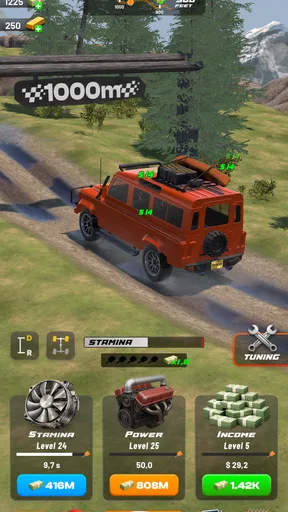
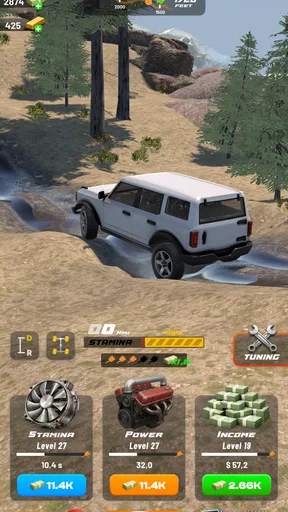
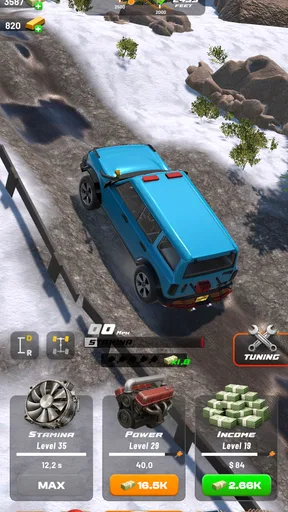
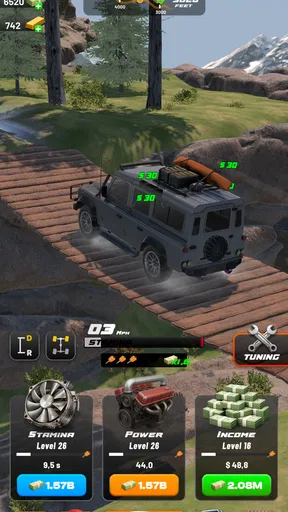
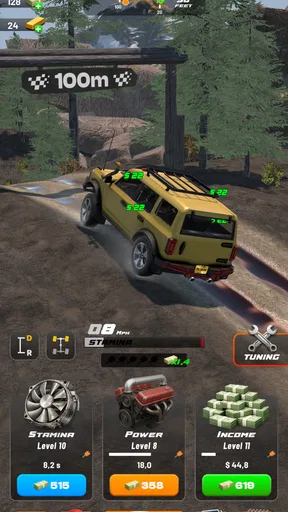
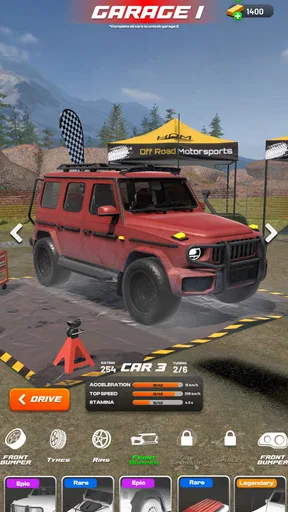
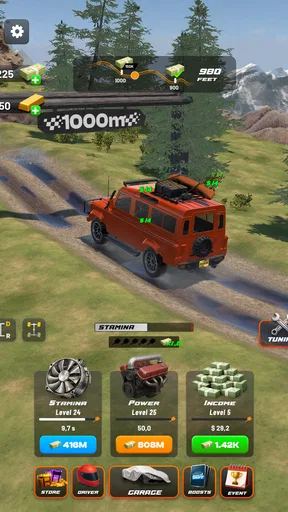
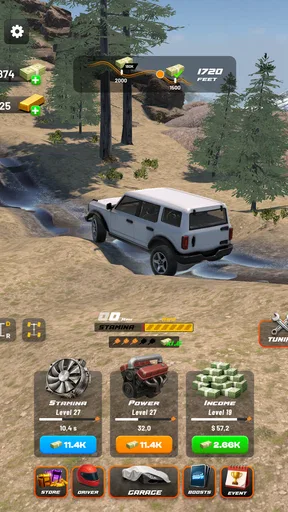
Our Review of Drive 2 Climb: Offroad 4x4
 Analysis by Appyee
I approached Drive 2 Climb: Offroad 4x4 expecting a straightforward off-road racing game, but its appeal is less about frantic speed and more about making sensible driving decisions. Developed by HyperMonk Games, it puts the focus on taking a four-wheel-drive vehicle through rough terrain, earning progress, and working upward through the game’s progression. The store’s brief promise is simple, yet the experience is most enjoyable when I treat each run as a small driving problem rather than a race that must be attacked at full throttle.
That distinction matters. In many mobile racing games, the obvious routine is to accelerate constantly, steer around obstacles, and hope the vehicle stays pointed in the right direction. Here, I found more value in watching the surface ahead, controlling momentum, and repeating a route until I understood where my earlier attempt went wrong. It is a free racing game for Android, rated for Everyone, with a current version of 0.3.5 and support beginning with Android 7.1. Its average rating is 3.9 from around 26 thousand ratings, while the game has passed one million installs, so it has already found a sizeable audience without presenting itself as a premium simulation.
My baseline workflow for each off-road run
My most reliable routine begins before I move. I take a moment to identify the immediate shape of the route, especially steep rises, uneven ground, and places where a poor angle could send the vehicle into a recovery situation. That short pause is more useful than it sounds. Off-road driving rewards preparation because a correction made early is usually smoother than a desperate turn made after the vehicle is already sliding or climbing badly.
I then build speed gradually. Holding the accelerator from the start may feel efficient, but it often removes the control needed for the first difficult section. I prefer to reach an obstacle with enough momentum to cross it while leaving room to adjust. This approach also makes failed attempts easier to understand: if I lose control, I can tell whether the problem was speed, steering angle, or simply approaching from the wrong side.
My basic loop is therefore simple: scan the next section, choose a line, apply measured acceleration, and correct gently. When a run fails, I avoid immediately repeating it with a faster input. Instead, I change one decision at a time. That repeatable habit turns the game from trial-and-error frustration into a modest skill challenge.
A realistic everyday use case is a short session during a commute break or while waiting for an appointment. I would not start by chasing a perfect run. I would complete one attempt to learn the route, use the next to reduce unnecessary steering, and then decide whether another try is worth the time. This makes the game comfortable in brief bursts, provided I am happy with gradual improvement rather than instant rewards.
The earning and climbing structure gives those attempts a purpose. Progress feels more satisfying when I connect it to better driving rather than treating every reward as something that should arrive automatically. I found myself remembering troublesome sections and changing my approach on the next run, which is a stronger reason to replay than simply watching a progress bar move.
How I handle a failed attempt
When the vehicle gets into trouble, I first ask whether I caused the problem several seconds earlier. A bad landing, a sharp turn taken too late, or too much speed before a rise can create consequences that are impossible to correct at the final moment. Looking backward in this way is one of the most useful habits for new players because it prevents random button pressing.
I also avoid making several changes at once. If I alter my speed, steering direction, and route choice together, I cannot tell which adjustment helped. Repeating a difficult section with one controlled change makes the game’s driving feel more readable. It is a small technique, but it is the difference between learning a route and merely hoping the next attempt goes better.
Players who enjoy off-road racing should expect a slower rhythm than in a conventional circuit racer. The challenge is not only to be quick; it is to keep the vehicle stable over terrain that punishes careless momentum. If your ideal racing game is built around clean laps, overtaking, and constant speed, this may feel restrained. If you like improving a route through observation, the pacing is easier to appreciate.
Settings and controls worth checking before chasing progress
I recommend checking the available control and display options before judging the game. Even when a racing title looks simple, the difference between comfortable steering and awkward steering can decide whether a difficult section feels fair. I pay attention to how sensitive the steering feels, whether the interface blocks my view, and whether the chosen control method lets me make small corrections without overreacting.
My preference is to use the least demanding setup that still gives me precise control. A control scheme that feels exciting during an easy stretch may become tiring when the route requires repeated, tiny adjustments. Conversely, a slower-feeling setup can be better for climbing because it helps me maintain a steady line. I would test the controls on a few ordinary sections before spending too much time trying to master a difficult one.
Screen position matters as well. I keep my hands from covering the part of the display where I need to read the terrain. This sounds obvious, but it is easy to overlook when concentrating on acceleration. If the interface makes me steer from an uncomfortable angle, I would rather adjust my grip early than blame the vehicle for every mistake.
Device age is another practical consideration. The minimum operating-system requirement is Android 7.1, which makes the game accessible to a broad range of Android devices. Still, an older phone may make touch input feel less responsive than a newer one, particularly if other apps are active. Before deciding that the driving is too difficult, I would close unnecessary background apps and play with a clean screen and a comfortable grip.
The game is free to download, but it includes in-app purchases ranging from $0.99 to $99.99 per item. That is important when deciding how to approach progression. I prefer to treat purchases as optional and first learn whether the core driving loop holds my attention. The game is more satisfying when I can identify a real improvement in my play instead of assuming that spending is the quickest answer to every obstacle.
Because the age rating is Everyone, it is an approachable choice for families and younger players who enjoy vehicles. I would still explain the purchase model before handing it to a child, especially on a shared device. The rating describes the intended audience, but it does not replace sensible supervision around optional spending.
Small preparation habits that improve consistency
I play with notifications reduced and the phone held firmly in both hands. Off-road driving is forgiving when I make deliberate inputs, but interruptions encourage rushed corrections. If I only have a minute, I would rather complete a short focused attempt than play while distracted and learn nothing from the result.
I also keep a mental note of the first place where a run becomes unstable. That is more useful than trying to remember the entire route. On the next attempt, I concentrate on entering that section with a different speed or angle, then return to the normal rhythm afterward. This creates a practical checkpoint in my thinking without requiring a complicated strategy system.
Another useful habit is separating earning sessions from learning sessions. During an earning session, I repeat a comfortable route and avoid unnecessary risks. During a learning session, I accept that progress may be slower because I am testing a new line. Mixing those goals can lead to frustration: safe play feels boring when I want discovery, while experimentation feels wasteful when I need reliable progress.
Faster patterns that do not depend on reckless driving
The quickest improvement I noticed came from reducing corrections. New players often steer too much because every bump feels like a signal to make a large adjustment. In practice, aggressive steering can create a second problem immediately after the first. I get better results by making a small correction, waiting to see how the vehicle responds, and only then deciding whether another input is needed.
Momentum should be treated as a resource. Too little speed can leave the vehicle unable to clear a rise, but too much speed can make the landing or turn harder to control. The useful middle ground changes from section to section. I approach open ground with more confidence, then become conservative before uneven terrain. This is faster overall because it reduces recoveries and failed attempts.
I also use a two-pass method on unfamiliar routes. The first pass is for information: I watch the terrain and identify the sections that deserve attention. The second pass is for execution: I focus on those sections while keeping the easy parts calm. This is more effective than attempting a perfect run immediately, especially when the game introduces a route that looks simple but contains one awkward transition.
Experienced players can make their sessions more repeatable by using the same starting routine every time. I begin with moderate acceleration, keep my steering inputs light, and avoid changing my plan until the terrain demands it. A consistent opening gives me a stable reference point. If the attempt later fails, I know the problem probably came from the route choice rather than an entirely different opening.
There is also a useful trade-off between speed and information. A fast attempt may earn progress quickly, but a slightly slower attempt can reveal why a section is difficult. When I am stuck, I deliberately slow down enough to observe the vehicle’s response. Once I understand the section, I can raise the pace without relying on luck. That is a more dependable shortcut than simply holding the accelerator longer.
For players who want a simple routine, I suggest three attempts with three purposes: one to inspect, one to correct the biggest mistake, and one to decide whether the safer line is now consistent. If the third attempt still feels random, I stop rather than burning time. Returning later with a fresh grip often helps more than repeating the same error immediately.
Where the game differs from ordinary mobile racers
Compared with arcade racers built around traffic, lap times, or dramatic overtakes, this game places more attention on terrain management. There is less value in memorizing a racing line that stays flat and more value in understanding how the vehicle behaves when the ground changes. That makes it a better fit for someone who enjoys controlled driving than for someone seeking constant visual action.
It also differs from a full simulation. I would not choose it to replace a detailed driving simulator with extensive vehicle tuning, realistic technical settings, or a broad competitive structure. Its strength is accessibility: I can pick it up quickly, understand the central goal, and improve through repeated attempts. The trade-off is that players looking for deep mechanical customization may eventually find the experience narrower.
Against other casual off-road games, the best reason to choose it is the combination of short-session accessibility and route-based decision-making. The weaker side is that repetition can become noticeable if the player does not enjoy refining the same kind of driving challenge. This is not a game I would recommend solely because it has vehicles; I would recommend it because the vehicle handling asks for patience.
Advanced limits and the point where patience runs out
The game’s biggest limitation is also part of its identity: careful driving can become repetitive. Once I understand the safest approach to a section, replaying it may feel more like execution than discovery. Players who need frequent new mechanics, changing objectives, or a strong competitive layer may lose interest before the progression has time to become meaningful.
The free-to-play structure requires a little discipline too. Since optional purchases are present, I would not let a difficult moment automatically turn into a purchase decision. First I would repeat the route, change the approach, and decide whether the obstacle reflects a genuine skill gap. If improvement feels possible, the game rewards patience. If the experience starts feeling like progress is mainly about spending, it may be time to move on.
Another limit is that the game is not ideal for players who dislike failure without immediate explanation. Off-road mistakes can be caused by a chain of earlier choices, and the player has to interpret that chain. I enjoy that kind of feedback, but someone wanting clear, instant instruction after every crash may find the learning curve less welcoming.
I would also skip it if my priority were online competition or a highly social racing experience. Nothing about my enjoyment of this title depends on comparing a lap with friends; its appeal is personal improvement. For social racing, a game built around direct multiplayer interaction would be a better choice. For detailed vehicle customization, a simulation-oriented alternative would make more sense.
On the other hand, it suits players who want a free Android racing game that works well in short sessions and does not require them to memorize a large set of controls. It can also work for families because of the Everyone rating, as long as adults keep the in-app purchase range in mind. The ideal player is patient, likes vehicles, and enjoys turning a failed attempt into a small lesson.
What I would do before committing to long-term play
I would begin without purchasing anything and spend several sessions testing three things: whether the controls remain comfortable, whether route improvement feels rewarding, and whether the progression gives me a reason to return. Those answers are more useful than the install count or the store summary because they depend on personal taste.
I would also check how well the current version behaves on my particular phone. The listed minimum is Android 7.1, but compatibility on paper does not guarantee that every device will feel equally responsive. If steering feels inconsistent, I would test the game with a stable grip and fewer background processes before deciding that the controls are the problem.
Finally, I would set a stopping point for difficult sections. Three or four focused attempts are enough to reveal whether I am learning. If every run becomes a copy of the previous failure, I take a break. That habit protects the game’s strongest quality—deliberate improvement—from turning into a frustrating grind.
My mastery verdict
After spending time with Drive 2 Climb: Offroad 4x4, I see it as a patient racing game rather than a pure speed test. HyperMonk Games has aimed at an accessible off-road experience where progress comes from driving more thoughtfully. The central satisfaction is not simply reaching the next reward; it is recognizing a troublesome section, changing one decision, and finally crossing it with control.
I would recommend it to someone who likes compact mobile sessions, rough-terrain driving, and repeatable improvement. It is especially suitable for players who enjoy building habits: scan the route, choose a line, manage momentum, and review the cause of a mistake. Those habits make the game feel deeper than its short store description suggests without requiring advanced racing knowledge.
I would not recommend it to someone looking for a complete racing simulator, constant competition, or a game that supplies a new surprise every few minutes. The repetition and optional purchase structure are real considerations. Its 3.9 average rating reflects a generally positive but not universal response, and I think that balance makes sense: the game has a clear audience, but its deliberate pace will not suit everyone.
For me, the deciding question is whether I want to improve a route or merely pass time. When I want a quick, focused driving challenge, it works well. When I want deep tuning, social racing, or a broad collection of racing formats, I would choose something else. As a free title with an Everyone rating and a low barrier to entry, it is worth trying, but its best results come from playing with restraint rather than treating every climb as a sprint.
My final advice is to judge it by the quality of your second attempt, not the excitement of your first. If changing your approach makes the terrain feel more readable, Drive 2 Climb: Offroad 4x4 can become a satisfying little off-road routine. If repeated runs feel identical and progress matters more than driving skill, the game is probably not the right fit for you.
Privacy and Permissions
See what permissions an app requests and how it handles your data.
- Wi-Fi connection information
- view Wi-Fi connections
- Other
- view network connections, full network access, control vibration, prevent device from sleeping, Google Play license check
Verdict
Strengths of Drive 2 Climb: Offroad 4x4
- Challenging off-road tracks make each climb feel rewarding.
- Different 4x4 vehicles offer variety in handling and performance.
- Short levels are convenient for quick gaming sessions.
- Physics-based driving adds weight and realism to vehicle movement.
- Mountain scenery gives the game a distinctive visual atmosphere.
Limitations of Drive 2 Climb: Offroad 4x4
- Vehicle upgrades can require considerable time or repeated play.
- Some obstacles feel more frustrating than skill-based.
- Controls may take time to master on smaller phone screens.
- Progression can become repetitive after several similar climbs.
- Performance may vary on older or less powerful devices.
Other Releases by HyperMonk Games
View All


Similar Picks in This Category
View All
Hill Climb Racing
Fingersoft4.3

Dr. Driving
SUD Inc.4.2

Traffic Rider
skgames4.5

Asphalt 8 - Car Racing Game
Gameloft SE4.6

Race Master 3D: Car Racing
Beresnev Games4.6

Extreme Car Driving Simulator
AxesInMotion Racing4.3
Frequently Asked Questions
What is Drive 2 Climb: Offroad 4x4?
Drive 2 Climb: Offroad 4x4 is an off-road driving game focused on climbing difficult terrain with powerful 4x4 vehicles. During testing, the main appeal was its simple but challenging driving system, where controlling speed, balance, and wheel grip is essential. Players drive across steep hills, rocky paths, muddy sections, and uneven tracks while trying to reach the finish without getting stuck or damaging the vehicle.
How do you play Drive 2 Climb: Offroad 4x4?
The gameplay is based on careful vehicle control rather than high-speed racing. You generally use acceleration and braking controls to move across obstacles, while adjusting your pace to prevent the vehicle from tipping over or losing traction. Each course requires a different approach, so rushing usually leads to failure. The game is easy to understand for beginners, although later challenges demand patience and better control.
Does Drive 2 Climb: Offroad 4x4 work offline?
Drive 2 Climb: Offroad 4x4 may be playable without a continuous internet connection, which makes it suitable for short gaming sessions while traveling or when mobile data is unavailable. However, some features can depend on connectivity, including advertisements, updates, cloud-related services, or optional in-game content. It is recommended to launch the game once while online and check which modes remain accessible offline on your device.
Is Drive 2 Climb: Offroad 4x4 free to download and play?
The game is generally offered as a free download, allowing players to try its driving challenges without paying an upfront purchase price. Like many free mobile games, it may include advertising and optional purchases for upgrades, vehicles, currency, or other conveniences. You can make progress through regular play, but users who want faster access to certain content should review the store listing and purchase settings carefully.
Is Drive 2 Climb: Offroad 4x4 suitable for children and casual players?
Drive 2 Climb: Offroad 4x4 is accessible to casual players because its controls are straightforward and the objective is easy to understand. Nevertheless, the physics-based terrain can become surprisingly demanding, especially when precise acceleration and balance are required. Parents should check the recommended age rating, advertising policy, and available in-app purchases before allowing children to play, particularly on devices connected to a shared payment account.
Play our best games!


